
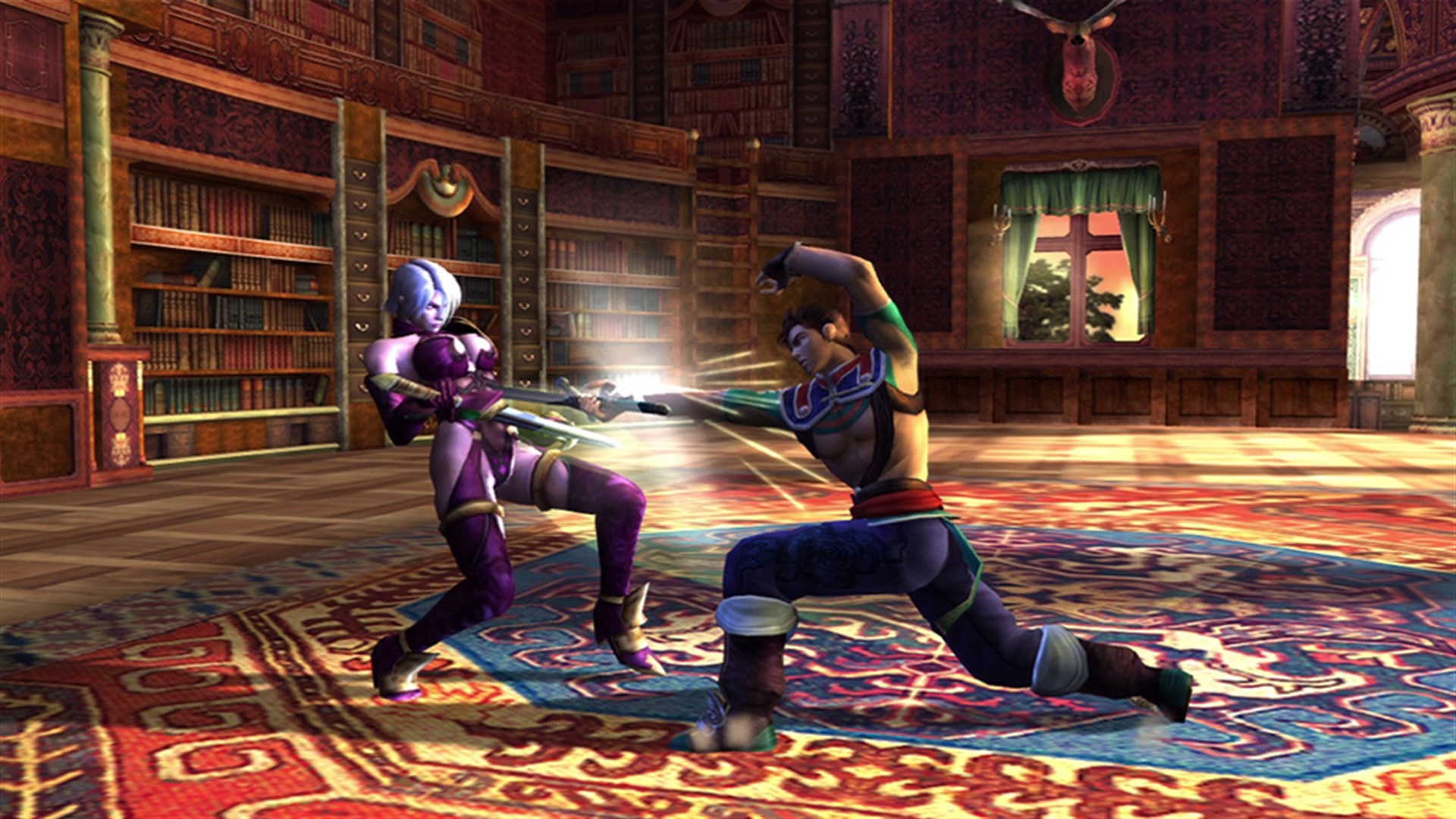
GAMES SOFT — Soulcalibur II gives distance a visible shape. A long blade threatens space before it connects, a sidestep changes the angle of an exchange, and a well-timed response can turn an opponent’s commitment against them. Its weapon-based fights reward attention as much as execution.

The search for the sword Soul Edge brings together a varied cast of fighters. Beneath their different weapons and personalities is a readable set of decisions: approach, move, defend, and attack with a purpose. Learning to recognize those decisions makes the spectacle easier to understand.
Understand the Relationship Between Movement and Attacks
Nintendo’s official introduction highlights the interaction between horizontal strikes, vertical strikes, and the game’s 8 Way Run movement. This provides a useful starting point for learning. Moving around an attack is a possibility to explore, while a different attack direction can challenge an opponent who keeps moving.
Avoid reducing that relationship to an automatic answer for every situation. The specific move, the distance, and the timing still matter. Test a familiar exchange in practice and watch what changes when you move earlier, wait longer, or use an attack with different reach.
Build a small collection of dependable options before trying to remember an entire move list. Knowing when one attack is useful creates a stronger foundation than recognizing the names of many attacks without understanding their purpose.
Choose a Fighter You Want to Learn
Soulcalibur II’s characters offer distinct visual and mechanical identities. Nintendo’s original GameCube description introduces fighters including Astaroth, Maxi, Mitsurugi, and Ivy, while that edition also features Link as a guest character.
Personal interest is a practical reason to choose a starting fighter. Repetition is easier to enjoy when the character’s movement and style appeal to you. Once you have chosen, become comfortable with a few attacks, a defensive response, and a reliable way to approach.
Watch the space just beyond your preferred range. An opponent may try to make your attack miss before stepping back in. Learning to recognize that invitation helps you become more patient. Sometimes the most useful improvement is deciding not to press a button immediately.
Make Defense an Active Part of the Match
The game includes throws, Guard Impact, and Soul Charge alongside its attack-height system. These mechanics create more questions for both players, but they become useful through understanding rather than constant use.
Start by noticing what repeatedly causes difficulty. Perhaps a low attack catches you while you are standing, or an opponent throws after you become too predictable with your guard. Choose one recurring situation and experiment with a response.
Guard Impact offers another interaction to learn, but it does not replace the need to recognize an attack. Treat an unsuccessful attempt as information about your timing or expectation. A patient defensive sequence can reveal more than a hurried attempt to interrupt every exchange.
Use Weapon Master to Explore the Game’s Variety
Weapon Master combines battles with a journey through the world and the collection of weapons. It gives the game a different rhythm from repeated matches against a single opponent. Other modes, including Arcade, Time Attack, and Survival, provide additional ways to spend time with the combat.
Let those modes answer different questions. A short session might focus on becoming comfortable with one fighter, while a longer visit to Weapon Master can emphasize discovery. In versus play, repeated matches make it easier to see how another person adapts.
Soulcalibur II remains interesting because a familiar matchup can keep producing new decisions. A move that worked earlier meets a prepared response. You recognize the adjustment, change your approach, and find another question waiting in the next exchange.
Game information: Nintendo: Soulcalibur II combat and Weapon Master overview · Nintendo: Soul Calibur II original GameCube game description. Gameplay observations and practice suggestions by GAMES SOFT.